


A vitamin deficiency or a poorly performed and removed manicure can cause the nail plate to become uneven and take on a dull appearance. Many people also experience brittle and splitting nails. In this situation, a Japanese manicure is an excellent solution.
In this article, you'll learn:
- What is a Japanese manicure?
- How often should you get a Japanese manicure?
- How can I do a Japanese manicure myself?
- How does a Japanese manicure work?
- Japanese manicure or gel manicure?
- Advantages and Disadvantages of Japanese Manicures
- Japanese Manicure for Nail Restoration
- Japanese Manicure: Step by Step
- Japanese Manicures for Women and Men
- Results of a Japanese manicure
- How do you remove a Japanese manicure?
- Is it okay to paint your nails after a Japanese manicure?
What is a Japanese manicure?
A Japanese manicure is a nail restoration method in which a special paste is massaged into the nail plate, and the nail surface is then buffed with powder. The procedure gives the nails a healthy, rosy sheen that lasts for about two weeks.
NEONAIL Japanese Nail Ritual combines natural ingredients to intensively strengthen and nourish your nails. Field horsetail helps the nail plate regenerate faster and better absorb the product’s valuable ingredients, while lanolin acts as a protective layer—helping to strengthen the nail’s protective barrier and prevent the formation of unsightly micro-cracks.
Care has also been taken to prevent nails from becoming brittle—glycerin and silicon dioxide help moisturize them and make them more flexible, thereby increasing their resistance to damage. Beeswax smooths the nail’s surface, fills in imperfections, and gives it a silky sheen.
You’ll see results after just the first use, and the procedure is very simple. The paste and powder included in the kit are numbered according to the order of use, and the colors of the corresponding applicators match the colors on the product packaging.
This treatment is especially recommended during the fall and winter, when hands and nails are exposed to drastic temperature changes.
NEONAIL has created a complete Japanese manicure kit that includes everything needed to perform the procedure. The products are numbered so you don’t have to worry about the order in which to use them. The colors of the paste and powder packaging match the colors of the corresponding buffers.

How often should you get a Japanese manicure?
It is recommended to get a Japanese manicure on a regular basis. As the nail grows out, it is necessary to reapply nourishing products to the new part of the nail plate and set them with powder.
If the procedure is performed regularly, the positive effects last for a long time.
When choosing a Japanese manicure set, it’s important to buy it from a reputable seller. A product of unknown origin can do more harm than good. The safest option is to choose professional, reputable stores where beauty professionals also shop. This ensures that the set you purchase is 100% authentic.
Japanese Manicure: Step by Step
To do a Japanese manicure correctly, follow these steps:
Step 1: Removing the previous manicure and preparing the nails
Before the procedure, it is necessary to completely remove any residue from the previous manicure. The nail plate is cleansed of its natural oil layer, the nails are shaped as desired, and the cuticles are pushed back.

Step 2: Rubbing in the paste
Apply the paste from the package labeled with the number to the peach-colored polisher 1.
Next, rub the polish into the nail plate until the nail becomes rosy and shiny. Move on to the next step only when the surface of the nail is even and smooth.
During this time, nourishing ingredients are infused into the nail plate and any unevenness is smoothed out.
It is important to apply the paste evenly in one direction, preferably using circular motions.

Step 3: Powder
In the next step, use the polisher provided for this purpose to rub the powder from the package labeled with the number into the nail plate 2.
The powder helps keep the ingredients of the peach-colored paste previously applied to the nail surface in place.
At the same time, it gives the nail plate a distinct shine and helps protect it from mechanical damage.

Beautiful nails aren't just about a colorful and eye-catching manicure—the most important thing is to have well-groomed and healthy nails.
This is often overlooked as people keep applying new coats of nail polish, simply hiding the imperfections of their nails. It’s especially important to take care of your nails during the fall and winter, when cold air, heating, and strong winds affect the condition of your hands and nails. A Japanese manicure can be a great solution during this time.
How does a Japanese manicure work?
A Japanese manicure provides an instant, well-groomed look and is especially useful when you need to improve the condition of your nails after removing gel polish or gel.
The entire procedure is simple, takes about 30–40 minutes, and can be done at home using the NEONAIL Japanese Nail Ritual kit.
The effectiveness of the procedure is based on a carefully formulated product composition.
They contain the professional active ingredient ImerCareVitalSkin, as well as field horsetail, which helps support the mineralization and regeneration of the nail plate.
Lanolin acts as a protective layer, helps reduce the formation of micro-cracks, and strengthens the nail's natural protective barrier.
Glycerin and silicon dioxide, on the other hand, help keep nails moisturized and flexible.
The formula is enriched with natural beeswax.
This combination of ingredients not only helps strengthen the nail plate but also provides additional protection against external factors.
As part of Japanese manicure treatments, specialists recommend refraining from applying nail polish to allow the nails to regenerate naturally.
Japanese manicure or gel manicure?
Both Japanese manicures and gel manicures have their own fans. The choice depends mainly on personal preference and the condition of your nails.
A gel manicure provides an instant, beautiful, and well-groomed look for your nails that lasts about 2–3 weeks.
The wide range of gel polish shades and nail design accessories allows you to create a wide variety of nail designs.
However, poor nail condition may be the reason why the gel polish doesn't last long enough. If your nails are weak or damaged, we recommend choosing a Japanese manicure, which is designed for nails that need to be restored and strengthened.
It is recommended to repeat the treatment every 2–3 weeks, and you can expect to see healthier, shinier nails after 2–4 treatments, depending on how fast your nails grow.

Advantages and Disadvantages of Japanese Manicures
The benefits of a Japanese manicure:
- It contains natural ingredients—lanolin, field horsetail, the active ingredient ImerCareVitalSkin, and beeswax;
- helps improve the condition of the nails, strengthen them, and promote their growth;
- The procedure is easy to perform, and you don't need to be a professional;
- a light, fast-absorbing formula;
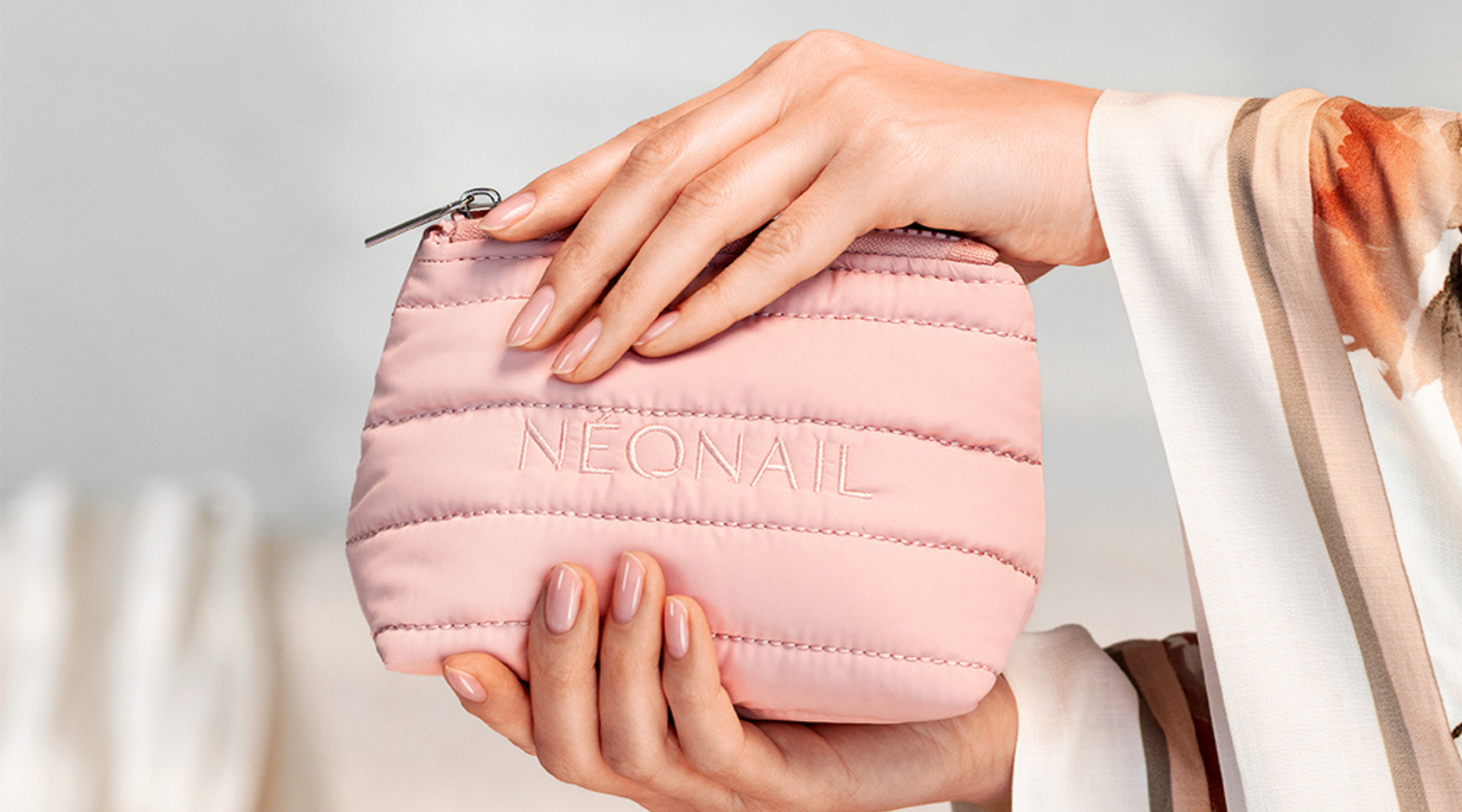
- This practical cosmetic bag makes it easy to take the NEONAIL Japanese Nail Ritual set with you;
- After the treatment, the nails remain shiny for up to 7 days without nail polish;
- The procedure can also be performed on toenails;
- Unlike nourishing nail polishes, the coating does not peel off;
- There is no need to use nail polish remover to reapply the product—simply add the necessary amount;
- Suitable for both women and men.
Disadvantages of the Japanese manicure:
- Regularity is necessary—it is recommended to undergo 2–4 treatments;
- The full results become apparent gradually, after about 2–3 weeks, depending on the speed of nail growth.
Japanese Manicure for Nail Restoration
Intensive massage of the nail plate with the right ingredients not only helps to nourish and strengthen the nails, but also gives them a distinct, pearlescent pink sheen.
This method has also become popular in Hollywood. In Poland, the Japanese manicure has been more widely available since around 2008, and its popularity has continued to grow ever since. Many beauty salons have already included Japanese manicures in their regular range of services.

Japanese Manicures for Women and Men
Who is this suitable for?
People with brittle nails who have already tried various nail care methods but haven't achieved the desired results.
A Japanese manicure is suitable for both women and men, as it does not stain the nail plate but simply gives it a shine and a healthy, well-groomed appearance.
Fans of gel polish, gel nails, or acrylic nails can also appreciate the nourishing properties of a Japanese manicure.
This is a great way to care for your nails after prolonged use of nail polish.
Results of a Japanese manicure
The main result of a Japanese manicure is shiny, smooth nails with a pearlescent effect.
The result depends on the quality and regularity with which the procedure is performed.
It is recommended to repeat the procedure 2–4 times; a more noticeable effect becomes apparent after about 2–3 weeks.
A Japanese manicure will be especially appealing to those who prefer a natural look for their nails. It is suitable for both women and men with damaged or weakened nail plates.

How do you remove a Japanese manicure?
There's no need to remove a Japanese manicure—over time, it gradually fades away on its own.
Since the products are massaged into the nail plate during the procedure, their concentration in the nail decreases over time and the effect gradually fades.
Is it okay to paint your nails after a Japanese manicure?
Yes.
After a Japanese manicure, you can paint your nails, but it's best to wait 4–5 days. Otherwise, the nail polish may not last very long.
Before applying nail polish, it is necessary to thoroughly degrease the nail plate, as it is significantly saturated with oils after a Japanese manicure.
Atceries: Life is too short for bad manicure!
And the foundation of a beautiful manicure is healthy, shiny nails.